Agentic CRM, the nurse’s side of the harness
Keeping a patient is a nurse’s work, so every follow-up starts from their protocol
On your nurse’s side, the harness knows where this patient is in their protocol and what the doctor last decided, whether that was last week or a year ago. Your nurse opens a record to the re-test that’s due, what was flagged and a drafted reply they approve, edit or skip before it goes.


At four points a patient decides whether to stay, and your nurse is there
When a side effect gets the reply to schedule another appointment, the patient just won’t come back, so your nurse starts from what your clinic and doctors wrote.
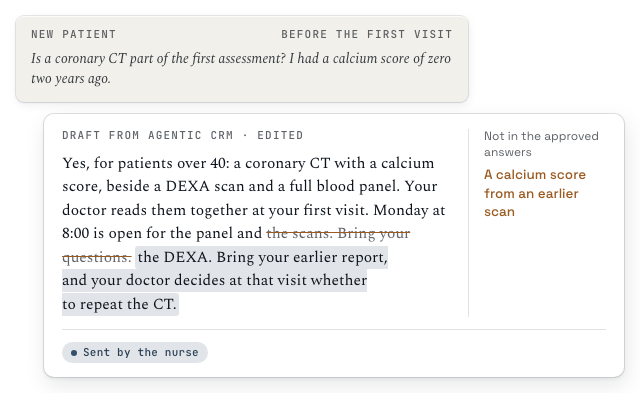
- The first conversationA prospective patient asks whether your first assessment includes a coronary CT when their calcium score was zero two years ago.
- The question that needs the doctorA patient three weeks into a GLP‑1 step-up writes that they can’t keep food down, and the nurse can’t answer that alone.
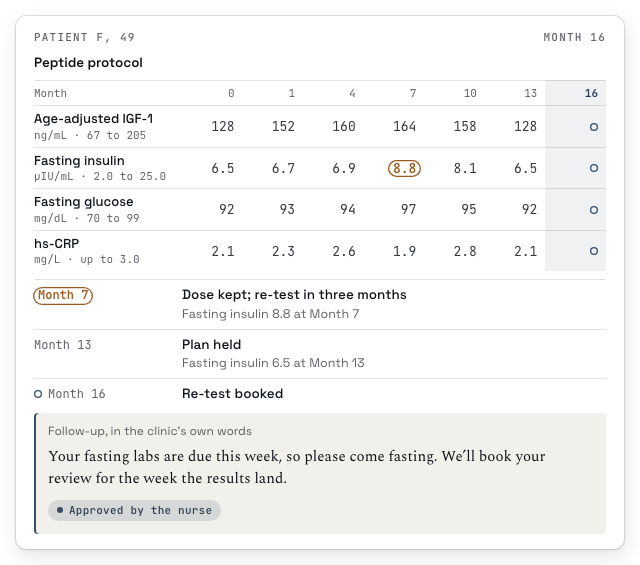
- The follow-up on its dayThe doctor dated a fasting insulin and glucose re-test for this week, three months after the last one on a peptide protocol, and your nurse can see whether the patient has had it.
- The patient who goes quietThe date the doctor set for a re-test goes by with no word from the patient and no complaint to tell you why.
Whether your nurses are clinical or commercial, they work with the protocol open
When you apply an agentic CRM to cash pay medicine, the nurse has to have the protocol in hand. Each follow-up it drafts keeps to your clinic’s approved words, and your nurse is the one who knows the medical reason behind it and what the doctor decided.
Commercial
Your commercial nurse answers a prospective patient’s first question from what your clinic approved
Lead conversion starts with the medicine, so a prospective patient who asks what the first visit measures gets a draft from your approved answers, with anything they don’t cover listed. Your commercial nurse, or whoever works your front desk, sends it where the patient wrote.
Clinical
A side effect beyond the nurse reaches the doctor with the record behind it
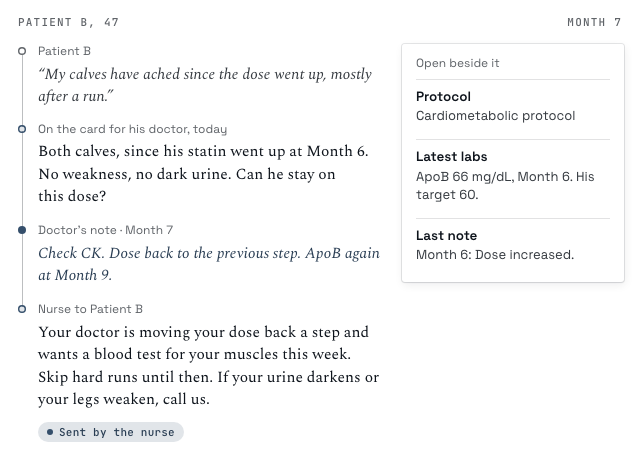
A patient writes that their calves have ached since the dose went up, and your nurse reads how bad it is, with the protocol, the latest labs and the doctor’s last note open. What needs the doctor goes up flagged by urgency, and your nurse carries the answer back.
Clinical and commercial
The re-test the doctor dated reaches your nurse on its day
When the fasting insulin the doctor dated comes due on your nurse’s list, they approve a follow-up in your clinic’s own words, and the review is booked for the week the results land.


The retention is the business, so the protocol tells your nurse who went quiet
A complaint tells you what went wrong, while the patient who stops writing back takes the reason with them, so your nurse works from what the protocol expected next.
The re-test that passed its date
A re-test the doctor dated goes past due and becomes your team’s to close, and it stays open until someone does.
The follow-up they cancelled
A re-test the doctor dated stays on the patient’s plan after the appointment is gone, and the cancelled visit stays on their record for your nurse to pick up.
The message nobody answered
A patient who stops replying shows as inactive on your nurse’s screen with suggested messages from their last conversation, and the nurse decides whether one goes.
With no payer, the protocol and the next payment sit on one record
For each patient, the doctor’s protocol, the coordination your nurses manage over time and what the patient paid sit together.
You read your return therapy by therapy, from the same record your nurse works
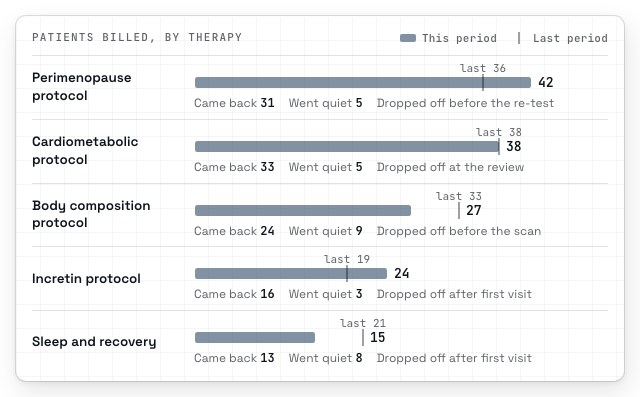
Each therapy shows what it brought in against the last period and how many patients it billed. Across the clinic you see who came back or went quiet each month and the stage where they dropped off.
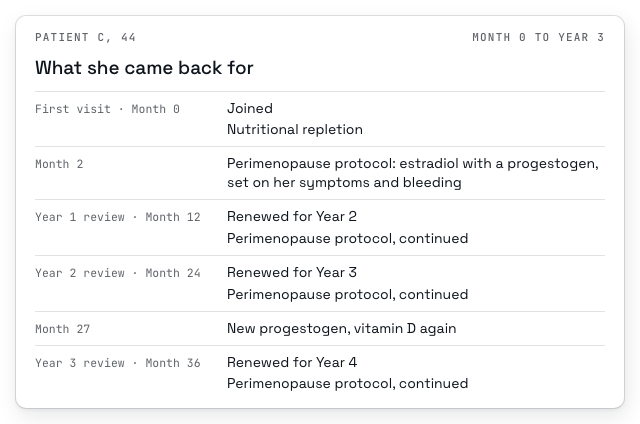
A patient’s years read as what they came back for, protocol by protocol
One patient began a perimenopause protocol at Month 2, estradiol with a progestogen, and testosterone for hypoactive sexual desire disorder. Their progestogen was changed at Month 27 for their bleeding pattern, and they renewed at each year’s review.


What a patient buys next rests on a year of trust with your nurse

- the patients each nurse can carry
- 4.3x
What an owner and a lead nurse ask before a draft reaches a patient
Does anything go out without us?
Not a reply.Agentic CRM drafts replies from your approved answers and hands what it can’t answer to a person, and whoever holds that conversation approves, edits, skips or snoozes the draft before it reaches the patient. A confirmation or a reminder goes out on its own only once you switch that one on and approve its wording.
What does a commercial nurse see of a patient’s record?
What their role allows.You give each person a role, so your commercial views show bookings, follow-ups and the reply drafted for them with nothing clinical on them, while labs and notes open in Clinical Intelligence, for your doctors and the nurses you seat there.
Will the flags add to my day?
Each goes to one role.What you do with each flag is kept, so how often one was worth acting on and how long it waited can be read by role and never by person.
How will we see our return by therapy?
On your own dashboards in iksa, read from your clinic’s bookings and payments, you see what each therapy brought in and how many patients it billed.
Does it replace the CRM we have?
Yes.Agentic CRM is your clinic CRM, with your nurses’ inbox and follow-ups on the same platform and the same patient as the clinical work, so your separate CRM retires. Your booking system keeps running the calendar and payments, and iksa reads them.
Does it handle bookings and scheduling?
It proposes the slots.Agentic CRM reads the open times on your calendar and proposes them in the reply it drafts, so the re-test the doctor dated is offered as it comes due. Your team books the visit in your booking system.
Clinical Intelligence: AI for longevity medicinePatient AI: patient engagement, with no patient app to installProtocol management softwarePractice management software, compared
Ask for your return by therapy, with your lead nurse on the call
Bring a protocol you run. We’ll walk one patient through it.