The harness for n‑of‑1 medicine
Trial-grade medicine built for individual cash-pay economics. One system of action for doctors, nurses, and patients so that concierge clinics can retain and scale better.
- Users
- 3,000+
- First-Year ROI
- 2.7x
We’re happy to walk through more of the specific expected outcomes based on your clinic’s profile and what we’ve achieved at our other clinics.

Where iksa’s team has worked and studied








What is changing, and which patients this is about
A patient like this stays for years on protocols that keep changing, followed the way an oncologist follows someone through treatment, and they don’t have cancer.
Healthcare will be more personalized, more concierge, with stacked protocols, and people will pay the premium for results over time. It is changing the way healthcare is manufactured, delivered and consumed.
The clinic is where people now act on their health, so each year a patient like this stays is one they choose again, and they stay where their protocols are followed that closely and every question reaches someone who knows their care, which is how a concierge clinic grows.
No clinic can afford a trial’s whole team for a single patient
You’re being expected to run a miniature clinical trial while also managing full time clinic volume, and your system was made to schedule appointments. Your clinic has its doctors, and with no payer the entire clinical, commercial and regulatory record is theirs to carry, and these micro-ecosystems of trial-grade medicine are running on spreadsheets.


What every visit leaves behind
Every visit leaves labs to chase, re-tests to schedule and messages to return, and your doctors keep that list themselves on top of a full day of visits, so that list decides how many patients your clinic can carry.
The trend across every visit
The charts built for clinics keep each visit on its own page and leave the trend to be pieced together, so the most expensive hours in your clinic go to reading back through old reports before each patient walks in.
The patient you stop hearing from
A patient who goes quiet leaves nothing on the chart and nothing on the calendar, so the first sign a clinic gets is the year’s review that never gets booked, and by then that patient is one you have to win all over again.
Whether each protocol is working
Whether each protocol is safe and working is the answer a patient pays your clinic for, year after year, and your doctors are holding that answer in memory, for every patient they see.
Every patient is a trial of one, and iksa is the harness that runs it
The frontier moves faster than its trials, and your patients often run combinations no single trial has tested, so iksa built the AI harness for n‑of‑1 medicine to bring each of them a trial’s rigor with the team you already have. A harness is what the AI knows, the protocol it works inside, what it monitors and the clinician who decides.
- What it knowsThe doctor’s notes, labs, body composition, the genome report, the wearable and what the patient reports, with each lab read against the range that applies to that patient and the critical-value rules. It reads what each patient tells it every day, so its agents run every patient’s journey at once, from where each one actually is.
- What it works insideEach protocol the doctor wrote, often several at once, and your clinic’s approved answers, so every change stays with that doctor. Inside them, routine questions get answered at any hour and the rest go to the person whose call it is, so a nurse’s time goes where only a nurse will do.
- What it monitorsThe markers and re-tests the doctor set, each on its own clock, from safety labs weeks into a dose step to a cell therapy’s months of follow-up, and any side effect a patient reports. Each morning your nurse sees who needs a call and why, and the labs your doctors are watching stay on one list beside it, so your clinic reaches each patient ahead of their need.
- Who decidesA clinician decides every change to a dose or a protocol, and for each patient your clinic switches on, once your nurse has reviewed their profile, the AI takes their routine questions off your team’s list. The agents draft each follow-up and reply for a person to approve, so each nurse carries more patients and every decision stays with your team.
A three-sided system of action for doctors, nurses and patients
Stacked protocols interact, a cell therapy in the knee holding back the strength block that protects lean mass. So each side’s AI has read the same patient, and a small team works like a superhuman one. That delivers clinical outcomes for patients and commercial outcomes for the clinic.
Doctors
A research team behind every doctor
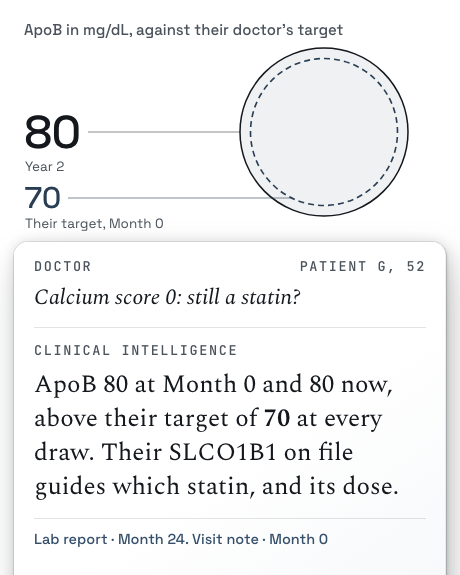
Clinical Intelligence: AI for longevity medicineA doctor asks one patient’s whole record what moved and walks in prepared with a sourced answer, while the markers and targets that doctor set keep being followed over months. What the patient has asked their treatment companion is on that record too, so the next protocol the doctor proposes, and the patient chooses, starts from their own questions.
Nurses
Every nurse works from the patient’s protocol, so the patient comes back
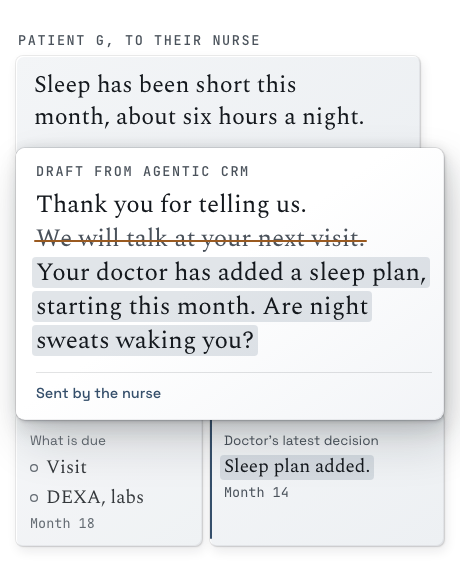
Agentic CRM: scheduling and follow-upEvery inquiry and patient message, from the channels your patients already use, reaches one inbox, where the nurse sees who is waiting and the doctor’s decision, with replies drafted from your approved answers, so the typing comes off your nurse’s day and what’s left is to approve, edit or skip.
Patients
A concierge for every patient
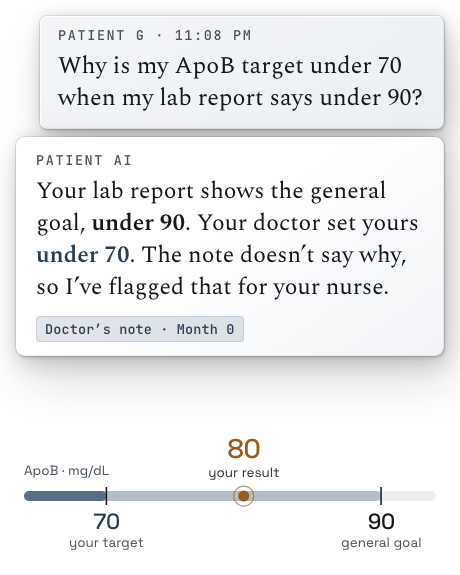
Patient AI: the treatment companionA question at eleven at night gets an answer from that patient’s own protocol, under your clinic’s name on the channel they already use, and anything clinical goes to their nurse.


One patient. Every side. Every year.

Illustrative
Each year on this chart they chose your clinic again, so see it on a protocol you run.
Book a walkthroughEvery protocol produces the evidence regulators require and life sciences acquires
If you run the protocol properly, the evidence falls out of care. That is what opens partnerships with biotechs for decentralized trials, with research and investment running inside the clinic. Long before anyone outside your clinic reads it, the same evidence is why a patient who pays for results stays with you, because what each protocol moved is measured, dated and in front of their doctor.
Every value, back to its report
Each value with the report it came from and the day it was taken, so your doctor reads each trend at its source, and the time it took to piece together goes to the next patient.
A patient any of your doctors can pick up
Each change to a protocol, back to the doctor who made it and the result it answered, so any doctor on your team picks up a patient from the last decision, and the standard holds as your clinic adds doctors.
- Which protocol each result came underEach result after an intervention, measured and dated under the protocol the patient was on, across patients, and in the same system you read what each therapy brings your clinic, month by month.
Trial‑grade medicine is already taking many forms across cash-pay clinics, from cell therapy and regenerative medicine to concierge and longevity
Our vision is autonomous personalized medicine in dispersed micro-ecosystems globally operating at trial-grade.
Longevity
See longevity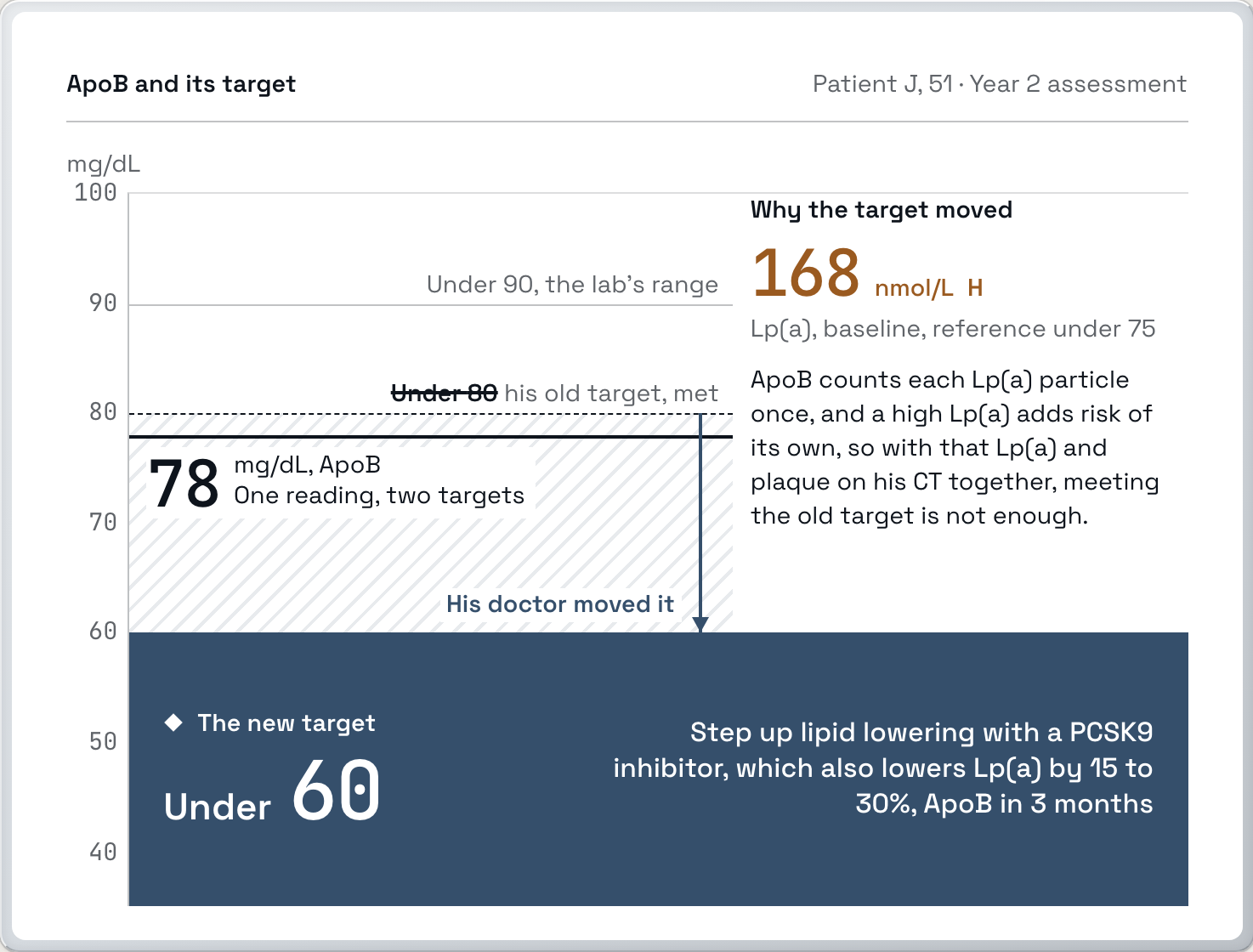
Anti‑aging
See anti‑aging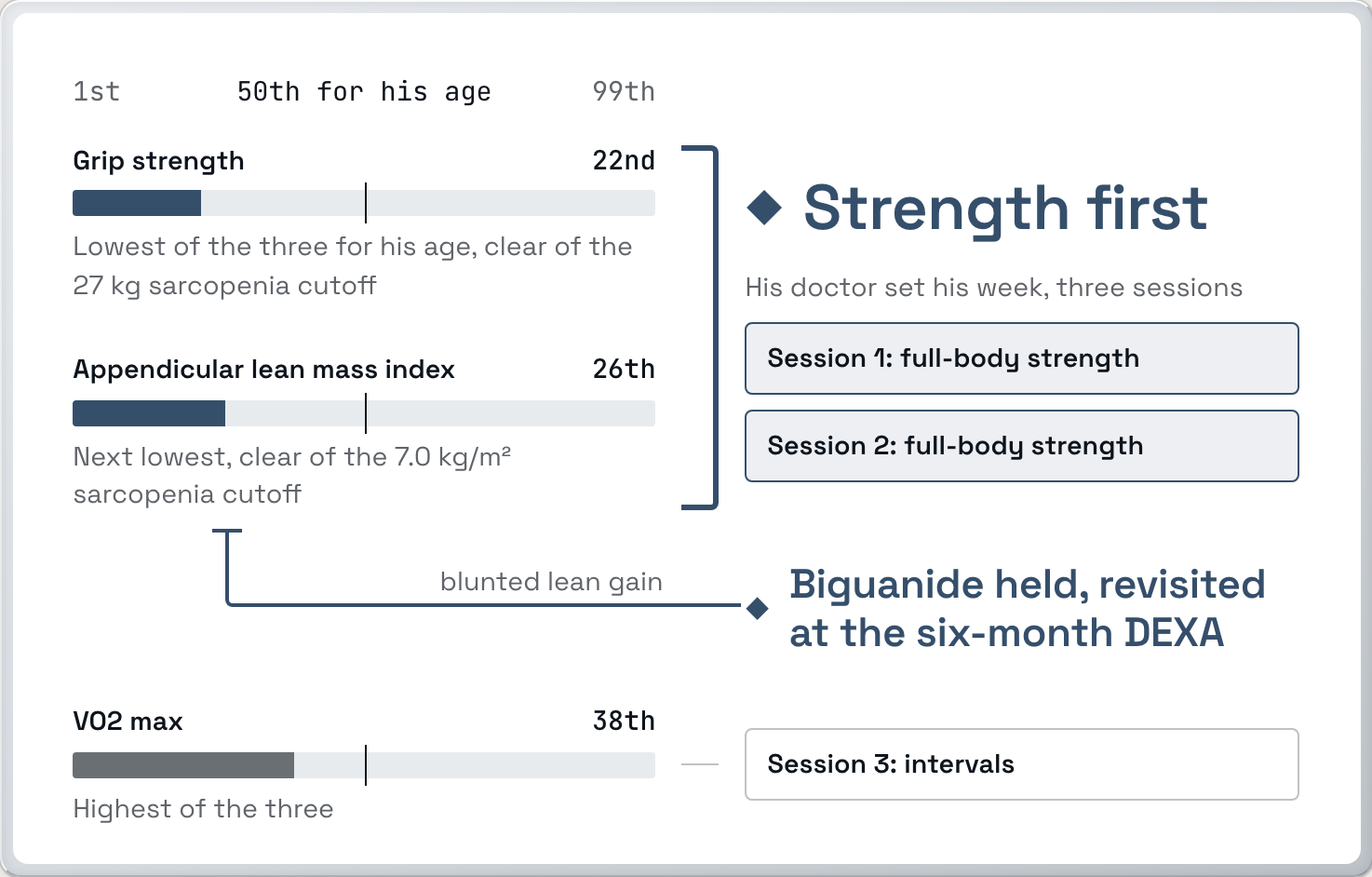
Concierge medicine
See concierge medicine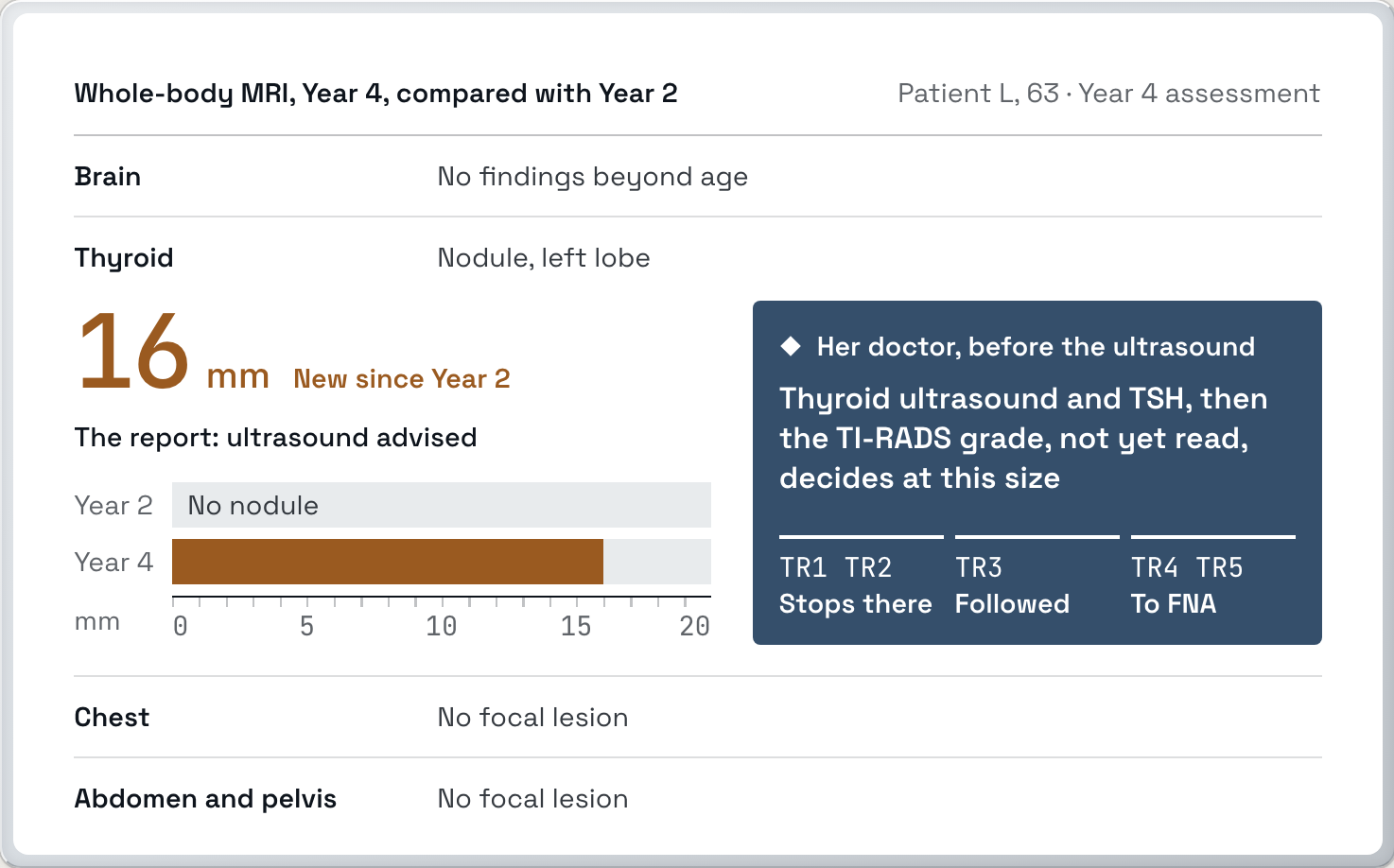
Women’s health
See women’s health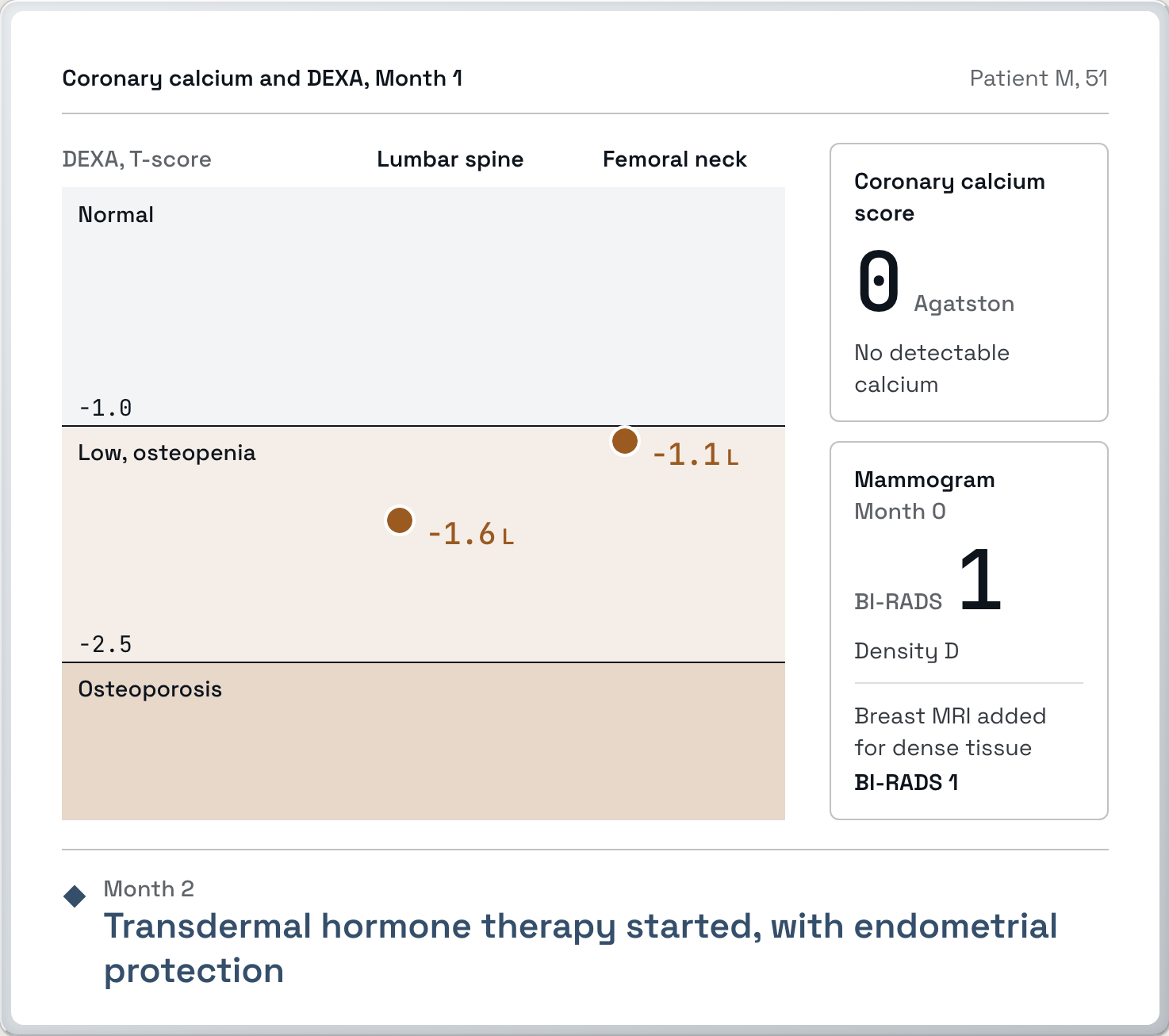
Men’s health
See men’s health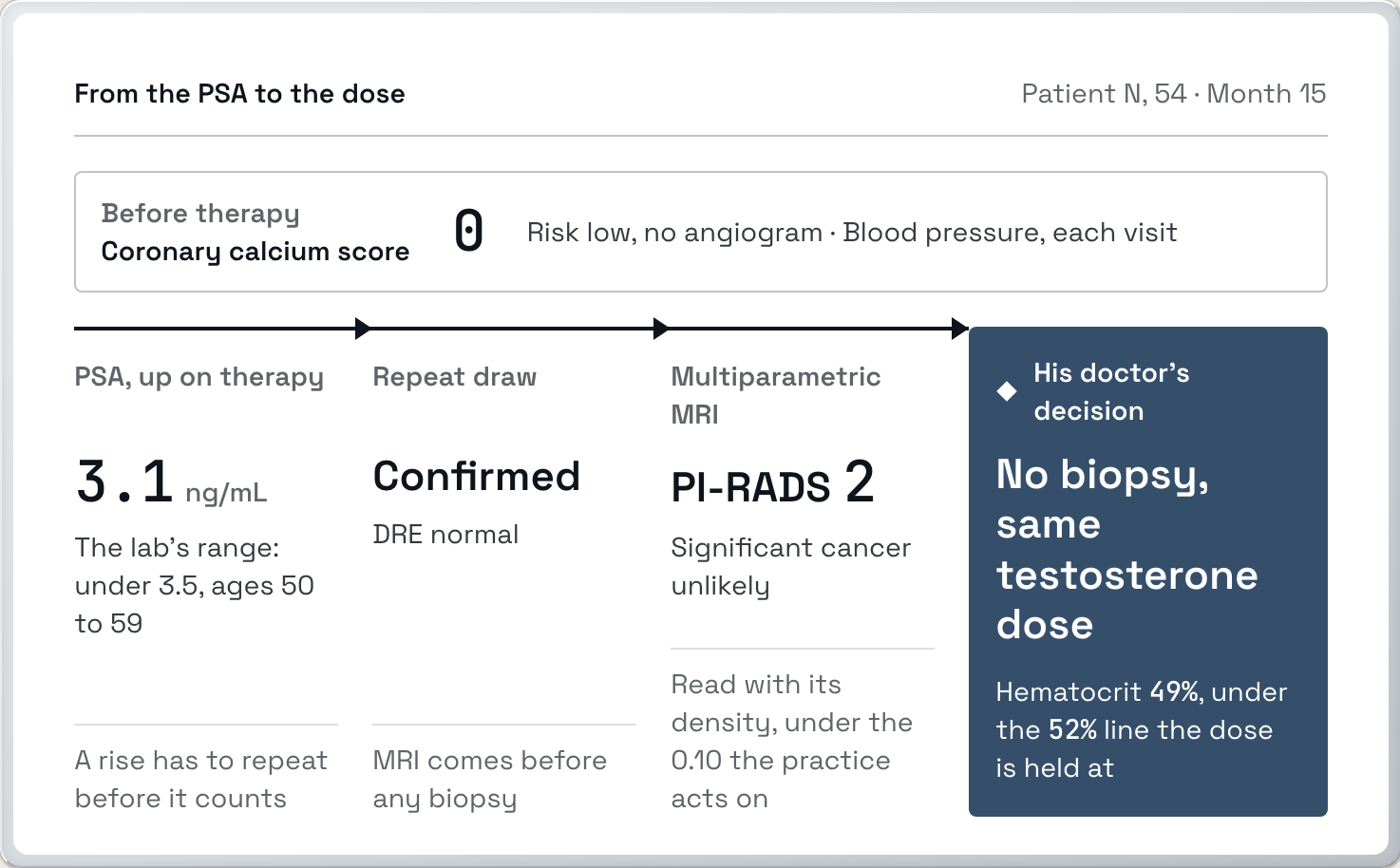


What clinic owners ask before they run trial‑grade medicine on iksa
How does this grow our clinic?
By winning and keeping more patients.Your clinic reaches out first, because the agents run every patient’s journey. Every inquiry, from the channels your patients already use, lands in one inbox as a lead, with a reply drafted from the answers your clinic has taught its own agents. Someone new with a medical question gets a drafted invitation to book a consultation, and the question goes to your clinicians. Each patient’s stage moves by itself, from first message to paying patient, and one who cancels with nothing booked moves to Lost while your team can still reach them. Routine questions from the patients you switch on get answered from their own plan, anything about a package or price reaches your front desk as a task, and a person approves every follow-up your clinic sends. So your clinic wins more of the patients who ask, keeps them through each protocol and runs 4.3x patients per nurse.
How does iksa help us keep patients from one year to the next?
Your nurse keeps each one in view.A patient who goes quiet comes up for your nurse with a message suggested from where their last conversation ended, to send or to let rest, and at each year’s review your doctor reads what their protocols moved and what they asked through the year, so the patient chooses their next year of care with your doctor from their own results. Each month you read your revenue as new, returning, growing, shrinking or lapsed, which tells you whether your patients are staying.
Does this replace our EHR?
No.Your doctors keep charting where they chart, and the calendar and payments stay put. iksa reads it all where it connects, takes the rest in as documents and holds each patient’s protocols beside them over years, writing nothing back by default, so your team books where it always has, and the inbox, the morning briefing and the follow-ups come on top of the systems it already knows.
Does trial‑grade mean we are running a registered trial?
No.It means a trial’s discipline on a protocol your doctor writes for one patient: a baseline, what each intervention should move, the side effects to watch, a dated re-test, a stop rule, the doctor’s decision and a source behind every result. iksa holds all of that for your team, so your patients stay in your care, nothing is randomized or blinded and no research paperwork comes your way.
Why not use a general AI model?
It doesn’t understand your protocols.It wasn’t specialized for your segment, it is often behind the times, and when a patient asks, it creates anxiety where they needed your guidance. iksa is a white-labeled physician AI for your patients, carrying doctor-approved guidance, and a Clinical Intelligence that beats the general models for your doctors, because it follows each protocol’s markers, re-tests and targets.
Can our clinic take part in research?
Your clinic decides.Care run with a trial’s discipline produces evidence as it goes, and a research partner would read it only if your clinic takes part, de-identified, from patients who have consented, once ethics review is in place, so your team’s day stays as it is until your clinic chooses. The business associate agreement (BAA) governs how iksa handles your patients’ data every day.
n‑of‑1 medicine, in fullWhy personalized medicine, why nowHow clinics startSecurity and trustWhat iksa adds
Run your hardest protocols at trial‑grade, for every patient you keep
Bring a protocol you run. We’ll walk one patient through it.